The Cashless Revolution by Martin Chorzempa
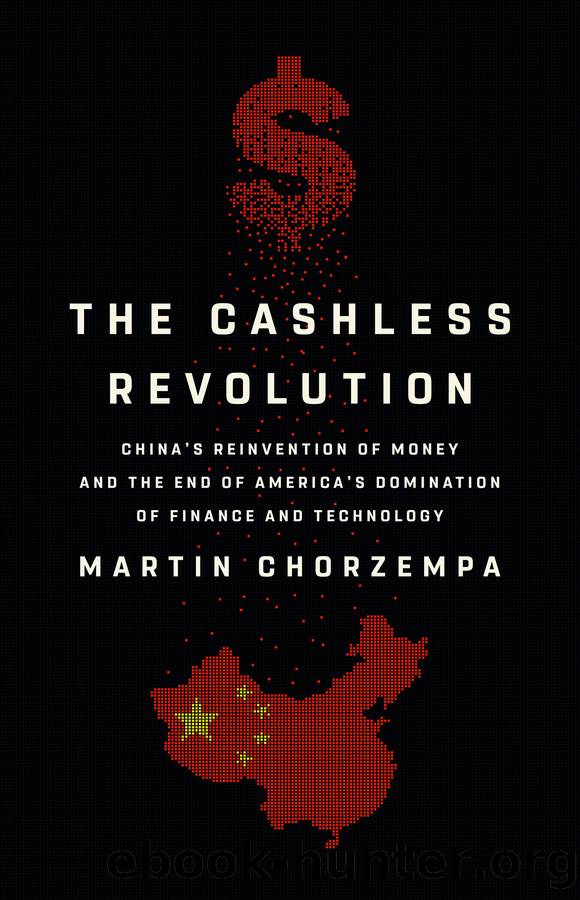
Author:Martin Chorzempa [Chorzempa, Martin]
Language: eng
Format: epub
Publisher: PublicAffairs
Published: 2022-10-04T00:00:00+00:00
Banishing Cryptocurrency
Digital currency took off again in 2016. Even after the authorities dampened Bitcoin speculation in 2013, trading volume at Chinaâs exchanges continued to dwarf those in the rest of the world, peaking at 98 percent of global Bitcoin trading in December 2016.29 What made Bitcoin so appealing to Chinese people was the inability of any government to control it. That was untenable to Chinese leaders. In addition to domestic risks, Chinese policy makers were preoccupied with capital outflows. Investment outside of China by large companies and money fleeing a slowing economy depreciated the RMB and drained almost a trillion dollars of Chinaâs foreign-exchange reserves by December 2016.
There is little evidence that digital currencies were being used for capital flight in large enough quantities to make a difference. But the government, media, and investors in China were abuzz with rumors that it was, and in huge quantities. One could purchase Bitcoin or another cryptocurrency with RMB at a Chinese exchange and then transfer it to a digital wallet that could be cashed out on an exchange anywhere in the world, with no way for the Chinese government to track it. Intermediaries specializing in this capital flight proliferated on WeChat, illustrating the limits of surveillance and control.ii Authorities responded by tightening their oversight of digital-currency exchanges in China, which could be regulated even if Bitcoin itself was outside the governmentâs reach.
On January 6, 2017, regulators announced that they had conducted âan interviewâ with BTC China to ârequire it to operate strictly according to relevant rules and regulationsâ as a result of âunusual volatility.â30 Because of another possible Chinese regulatory wave against Bitcoin, its global price dropped by 12 percent. Investors were right to worry, for regulators discovered problems from illegal margin financing to poor controls on money laundering.31 Under PBOC pressure, Chinaâs top three exchanges imposed fees of 0.2 percent on transactions, ended margin financing, and shut off the ability to âwithdrawâ Bitcoin outside the exchange, making it just about impossible to use for capital flight. Yet the PBOC remained tolerant and permitted the exchanges to resume business once their controls had improved. The exchanges might have thought they were in the clear, but another speculative frenzy would get them kicked out of China once and for all.
In 2017 the governmentâs desire for control was in full display when a new investing crazeâinitial coin offerings (ICOs)âswept the world. ICOs sold new digital currency or digital assets to the public to raise money for blockchain ideas, from decentralized networks for cloud file storage to tracking tuna supplies with blockchain (for some reason). An ICO was essentially a presale for digital products that did not yet exist. Bloomberg opinion columnist Matt Levine memorably described this as akin to the Wright brothers choosing to finance their first airplane by selling discounted frequent-flyer miles.32 Investors were betting that once the idea took off, demand for the digital currency would drive its price into the stratosphere.
In another frenzy to get rich quick, investors rushed to invest
Download
This site does not store any files on its server. We only index and link to content provided by other sites. Please contact the content providers to delete copyright contents if any and email us, we'll remove relevant links or contents immediately.
| Arms Control | Diplomacy |
| Security | Trades & Tariffs |
| Treaties | African |
| Asian | Australian & Oceanian |
| Canadian | Caribbean & Latin American |
| European | Middle Eastern |
| Russian & Former Soviet Union |
The Secret History by Donna Tartt(19086)
The Social Justice Warrior Handbook by Lisa De Pasquale(12190)
Thirteen Reasons Why by Jay Asher(8909)
This Is How You Lose Her by Junot Diaz(6886)
Weapons of Math Destruction by Cathy O'Neil(6279)
Zero to One by Peter Thiel(5801)
Beartown by Fredrik Backman(5754)
The Myth of the Strong Leader by Archie Brown(5507)
The Fire Next Time by James Baldwin(5442)
How Democracies Die by Steven Levitsky & Daniel Ziblatt(5218)
Promise Me, Dad by Joe Biden(5153)
Stone's Rules by Roger Stone(5087)
A Higher Loyalty: Truth, Lies, and Leadership by James Comey(4962)
100 Deadly Skills by Clint Emerson(4925)
Rise and Kill First by Ronen Bergman(4788)
Secrecy World by Jake Bernstein(4753)
The David Icke Guide to the Global Conspiracy (and how to end it) by David Icke(4717)
The Farm by Tom Rob Smith(4507)
The Doomsday Machine by Daniel Ellsberg(4490)
